
A few weeks ago, I received a notification about a new MTDNA relative. I went in to see who was new and who had any information on their last known mito relative. Many of my matches have no information at all. I haven’t made much progress with it.
Metal Ages

MTDNA has been frustrating the way that Y DNA was in years past. With MTDNA I’ve been sitting at T2a1a for a long time. In the Metal Ages. Similar to when I wanted to know more about a man born in the 1800s and Y DNA had me sitting at the time of Cave Paintings. Nice, but, not as helpful as you’d like. Getting back from the 1700s to the metal ages without more waypoints is really hard.

I could get lucky though. I’m still interested, and I still go and look to see what has come in, but this time, I noticed something was different on my full matches.

F9796825 looks a lot like a family tree DNA haplogroup. I went back to my dashboard to make sure I’m still T2a1a there and I noticed something else. A beta Discover Haplogroup Reports.

Exciting stuff. I clicked that and got this report that is similar in style to the Y DNA reports I see. Except for the massive amount of descendant lineages. 112 Descendant lineages!
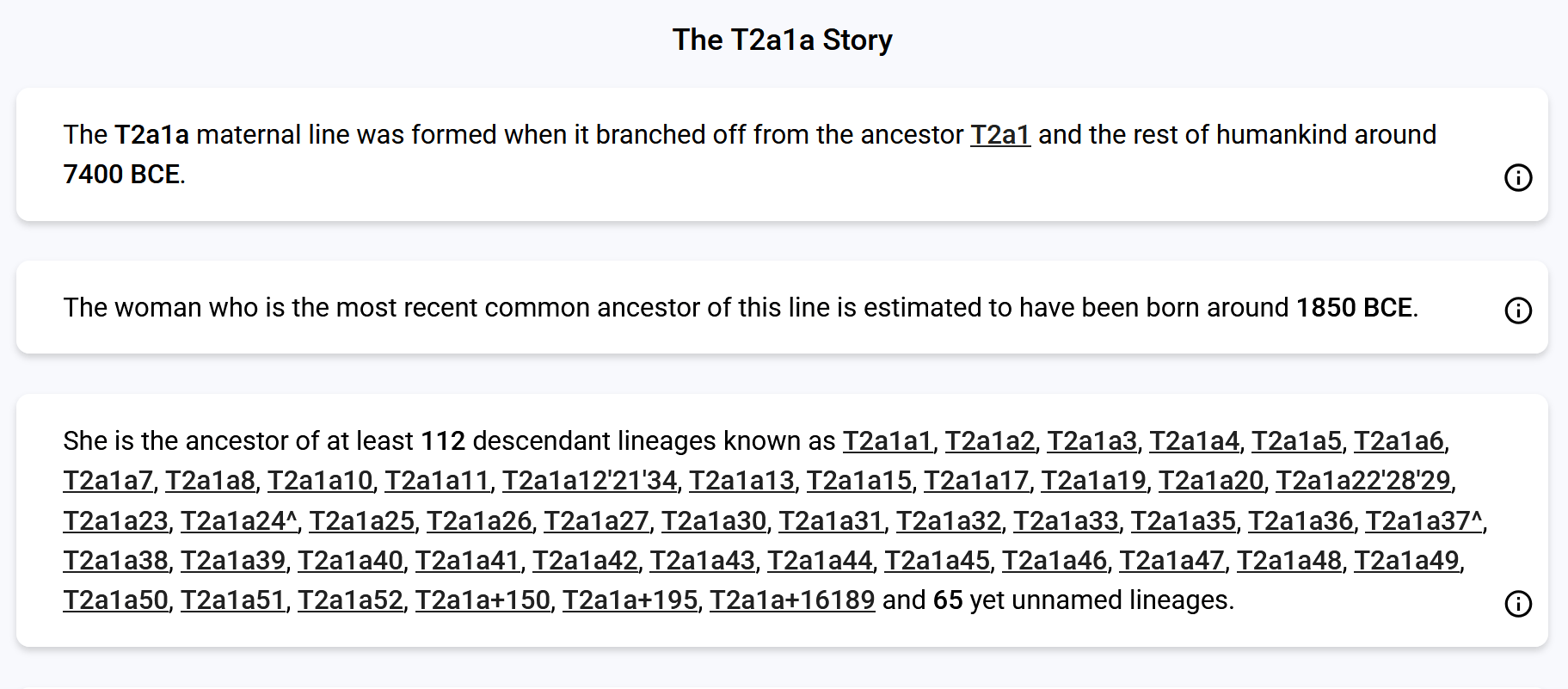
For reference, this is the T2a1a tree I think more people are used to. It has eight subgroups as opposed to 112.

The Time Tree
Next I went to the Match Time Tree report and there I was in a large group of people, clustered as F9796825.


When I hovered over the group though I was informed that this is a haplotype cluster, not a haplogroup. So we have a bunch of matching values in both fast mutating and slowly mutating areas. The explanation from FTDNA reminded me of the Cumberland Cluster, where STR values lined up with a group of people, but it would take Big Y to sort out who was actually more closely related in that group of similar results.
Scrolling down the time tree, I saw other large clusters like mine and smaller groups that had broken out into haplogroups, some with clusters beneath them.

I also saw some beta priority groups. They look almost like haplogroups in progress. Like defined haplogroups, they have age estimates, bringing many of them closer in time to genealogical records.
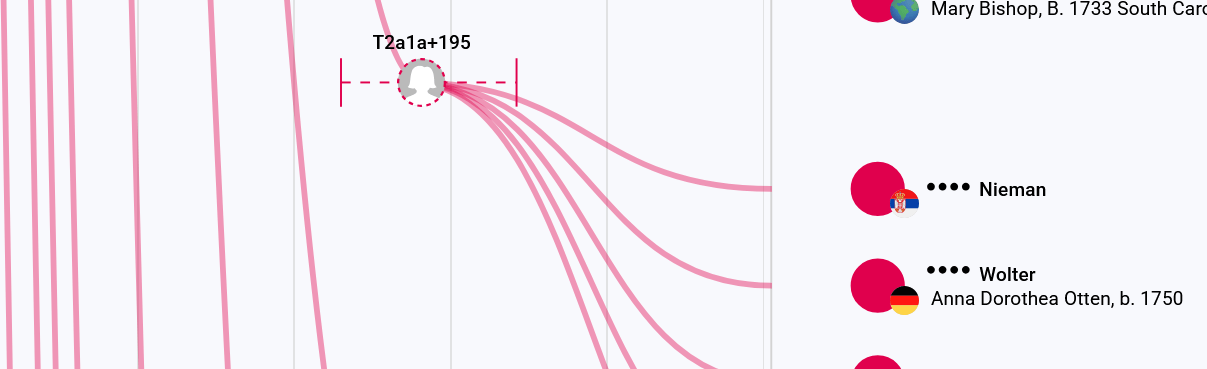
This is exciting news for people researching maternal lines. Haplogroups and Priority groups lining up in the 1530s are a lot closer to home than the metal ages. It will be so much more helpful for MTDNA completionists (like me) and people who have real burning questions about their maternal line that have been waiting for a good pointer in the right direction.
The Official Word
It turns out that FTDNA has an official blog post about this from February. So it seems that it is all shiny and new and there is still work in progress.
Where Does that Leave Me?
It’s my diary so it’s all about me. For now, I’m pretty much where I was before…with a tantalizing new possibility. My badges for the new beta and legacy still say T2a1a, but this new intriguing cluster may turn into something else one day. There is also the hopeful optimism that comes from seeing work going on in the mtDNA world.
I could get lucky.